Your Guide to Cult Movies, Arthouse Oddities, Grindhouse Swill, and Underground Obscurities!
Sunday, February 1, 2009
L Change the World
L Change the World (2006) Hideo Nakata
I admit to having gone through an uncharacteristic (for me) love affair with all things Death Note. Mind you, the usual rule of thumb is that if I like a property it is doomed to be a failure, universally hated or leave people scratching their heads. Not so here! Death Note was a phenomenon in its native Japan, banned in China and controversial but hugely popular in the US.
I quite enjoyed Death Note I and II (see Shock Cinema Magazine #33) and was excited when one of my birthday gifts turned out to be the third film in the franchise. Some movie-savvy friends who attended a very early US screening of L reported back that it was "boring" and "confusing, and granted, if you haven't seen the other Death Note films or read the manga, no doubt that is an apt reaction to this complex, ongoing story line. The L novel, which was not written by either of the creators of the manga, is the only book in the series that I have not read, so I can't speak for the adaptation in this case. The first two films strayed from the manga but not to the detriment of the story telling, my guess is that the same methods were employed here. I'm not a hardcore fan who thinks an great adaptation is a pedantically accurate one.
The production values and cartoony CGI elements are the same high quality as the previous films, as is the acting. While I still feel the best performances of the series came in the form of Yagami Light and his police chief father (both rolls diminished here to video footage in the backgrounds), Quirky detective L is at top form, acting weird, being a jerk and eating enough sugar to make even a hard core junk-food addict swear off sweets for good. That Ken'ichi Matsuyama can actually carry a film without the benefit of more seasoned performers surrounding him (Tatsuya Fujiwara starred in Battle Royal before playing Light as well as a host of other projects for a fairly young guy, and Takeshi Kaga is a legend) makes me more interested to see him in the upcoming Detroit Metal City. Shunji Fujiura returns briefly as Watari, the Alfred to L's Bruce Wayne, before being dispatched much the way he was in Death Note II.
This story takes place just after film two ends. L, "the world's greatest detective" has twenty days left to live (it has to do with the way he solved the mystery of the first two films, I won't try to explain) and yet there is a weaponized virus on the loose and a group of eco-terrorists that must be stopped before his time is up! Worked into this mix is a small Thai boy-genius who is immune to the bio-weapon plague, a teenybopper who's father is a brilliant Virologist, and said virologist's sexy co-worker Dr Kujo (and ultimately the baddy of the story) played by Youki Kudoh -- the Karaoke belting kid of Sogo Ishi's 'Crazy Family' - all grown up and lovely (but still crazy!). Since this plot is not driven by the Death Note device, the weird-shit-factor in the form of the CGI Shinigami are kept to minimum, a cameo even, which is a shame because I really got a kick out of Ryuk's excellent voice actor, Shido Nakamura. Be warned that, as the rule in third sequels, the kids factory in pretty heavy -- not Mad Max Beyond Tunderdome heavy, but still... Also, it seems odd to tack such a happy, positive message to a series that is characteristic for projecting an ugly, cynical view of the human race and stars a character who you know perfectly well is doomed because you saw him die in the previous film. Hmmm. Director Nakata (Honogurai mizu no soko kara- Dark Water, Ringu), does what he can with the material and keeps it moving along - no small feat considering it clocks in over two hours long - but certainly not his most dynamic attempt either. One does get the feeling this veteran horror film director relished the flesh-eating-virus scenes. Nice cinematography by Tokusho Kimura (Ju-on, Kiyoshi Kurosawa's Cure) ties the visuals together. Certainly an entertaining addition, but really this is aimed at the Death Note fans, newcomers would do better to start elsewhere.
Labels:
Chairman Kaga,
death note,
film,
horror,
japan,
kids,
series
Saturday, January 17, 2009
Goodbye, Number Six...
In my editorial for the upcoming SHOCK CINEMA #36 (which, FYI, is going onto the printing presses on Monday, 1/19, and will hopefully start shipping out to subscribers and stores on 1/28), I discuss all of the notable people who've passed away in the last few months. Unfortunately, that list just continues to grow in this new year. In 2009, we've already lost RAT PFINK A BOO BOO director Ray Dennis Steckler and the versatile Edmund Purdom (who was interviewed for SHOCK CINEMA by Harvey J. Chartrand back in #24) -- in addition to one of my all-time favorite actors, Patrick McGoohan, who died on January 13 at the age of 80.
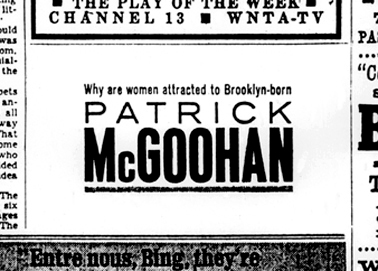
From early screen roles in the gritty trucker-drama HELL DRIVERS and the Othello-inspired jazz-tale ALL NIGHT LONG, to later gigs such as David Cronenberg's SCANNERS and Alexis Kanner's under-appreciated hostage-drama KINGS AND DESPERATE MEN, McGoohan continually proved that he was one of the coolest men alive. He won two Emmys for his scene-stealing guest gigs on COLUMBO, starred in the pre-007 secret agent series DANGER MAN, and was the guiding force behind one of the greatest programs ever made, THE PRISONER. Although McGoohan's career was certainly successful, he never became the superstar that Hollywood had envisioned -- as they promoted him in this rather silly, March 1961 newspaper advertisement, teasing the upcoming premiere of DANGER MAN.

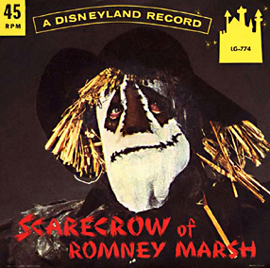
My first encounter with McGoohan's work was when 1962's THE SCARECROW OF ROMNEY MARSH played on THE WONDERFUL WORLD OF DISNEY. I was only a little tyke, but my parents bought me the 45 lp of its creepy title theme and I played that record until it almost wore out (almost as much I played The Beatles' single for TWIST AND SHOUT, which was given to me by a much-cooler older cousin -- since my tone-deaf parents were more into Lawrence Welk, Boots Randolph and Ray Conniff). Of course, I didn't know who the heck McGoohan was, but the movie itself was unforgettable -- exciting, scary, dramatic, and nothing like the crapola that Disney foists onto the public nowadays.

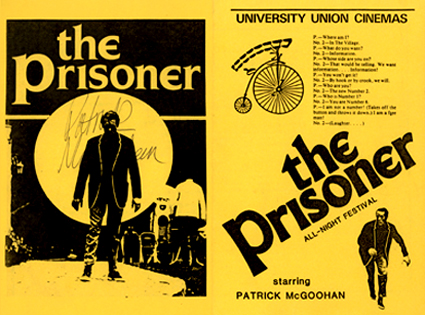
Many years later, while attending Syracuse University, I discovered McGoohan's revolutionary 1967 TV-series THE PRISONER, (if you've never seen it, shame on you). Alas, in this pre-VCR era, it was almost impossible to see the show, since it hadn't been broadcast on US stations in several years. Luckily, I just happened to be the Film Coordinator for one of the largest campus film programs in the country, so the answer seemed quite logical -- I'd rent 16mm prints of the series, straight from the show's original distributor ITC, and run an all-night PRISONER Festival during the Fall 1981 semester. It only ran 17 episodes -- which, minus all of those pesky commercials, boiled down to 'only' 14 hours. It ran from early-Saturday-evening to late-Sunday-morning, and a surprisingly-large crowd of fanatics stuck it out from beginning to grueling end.
A few years later, I had a chance to see McGoohan on-stage during his 1985 Broadway stint in Hugh Whitemore's PACK OF LIES. While autographing the Xeroxed program booklet for our PRISONER Festival, he remarked: "You watched all of them... In one night? That's insane." No, it was simply our small tribute to his mind-blowing series.

Oh, and if anyone can dig up a copy of McGoohan's big-screen directorial debut, the 1974 Richie Havens rock-musical CATCH MY SOUL, please, please drop me a line. I've wanted to review it in SHOCK CINEMA for nearly 20 years, but the film is completely M.I.A. -- and I'm still kicking myself for not renting it back in my University Union days, when New Line Cinema had a non-theatrical 16mm print for college screenings (under the title SANTA FE SATAN).
Friday, January 9, 2009
TV on DVD
Emily of New Moon, Season 1: This 1998, Canadian made television series followed on the heels of the successful Anne of Green Gables production, perhaps a bit misguidedly, as Emily was never as popular a series of novels as Anne. It is easy to compare the two properties, what with their vast similarities (Prince Edward Island, Orphans, aspiring writers), and Emily makes its best attempt to fill Anne's massive shoes. Michael Moriarty guests as Emily's doomed romantic of a father early on, and the cast is filled out in his absence with a stunning array of character actors including Phyllis Diller(!?!). The producers had thought it wise, apparently, to cast the younger version of sickly, brunette, grim Emily of the books with a rosy cheeked blond who grips her pet kitten while smiling sweetly at her mother's ghost. As the series progresses, this is corrected with Martha McIsaac's (of Superbad fame) black braids, a detail even a recent anime adaptation managed to get right from the start. Despite the brighter, 'American Girl' treatment, Emily of New Moon can not escape it's source material -- LM Montgomery's Gothy follow up to her famous Anne -- full of ghosts, shadows of death and insinuations to darker themes like murder, abuse and betrayal. All that considered this could have been a very exciting project indeed, but never fully takes advantage of its macabre potential. It's no wonder that audiences longing for another nostalgic, victorian, Anne of Green Gables-esq experience were put off by this cruel and disturbing view of turn-of-the-century Canadian life, while the low production values and the mundane script adaptation failed to grasp the more discerning viewer who might be unfamiliar with the original books. While I may seek out the other seasons as www.echobridgeentertainment.com releases them, I have a feeling that the Emily, Girl of the Wind animated series might hold my attention longer than this (assuming it ever gets a US release). The Japanese love LM Montgomery almost as much as Canadians do, apparently.
(It has been brought to my attention that this is pretty far flung from our normal viewing and reviewing, but hey -- inking comics can be mind numbing work that requires loads of bad TV and Cinema, and sometimes I need to get it out of my system, you lucky readers you! Hey I could wax poetic about watching Dawn of the Dead for the billionth time like every other movie blogger on the interwebs....)
Labels:
Canada,
character actors,
classics,
fail,
literature adaptations
Thursday, January 1, 2009
Recent Netflix Views:
Mongol
I'll admit to being easily drawn into historical epics and revisionist westerns, Mongol bridges both in it's approach to biographical/historic material. A bio-pic about Genghis Khan, from birth to height of adulthood. This Khazic co-production was directed by Russian born Sergei Bodrov with glorious, sweeping cinematography befitting of the subject matter. Nominated for best foreign film in 2008 it lost to German period piece The Counterfeiter. Tadanobu Asano stars as Temudjin (pre-Genghis) hereditary Kahn who's family was over thrown, and the young chief-to-be thrown into a life of slavery, escape and struggle before coming into his own. Throughout he is driven by the love of his life Borte played by newcomer Khulan Chuluun, who bears the children of other men, bargains with hostiles and always keeps the home fires burning for her husband, and more, the man she believes will change Mongol forever. As always Tadanobu Asano delivers a strong performance, but it is Chuluun who stands out in this stellar cast. In the wake of post-Soviet hits Nochnoi Dozer and Dnevnoy Dozer, the industry seems to be blossoming, at top speed no less, with big budget, FX savvy films, and I hope very much to see more of the same. I waited a while to get my mitts on Mongol and I was not disappointed.
(fancy image courtesy of the official movie site: http://www.mongolmovie.com/)
Saturday, November 22, 2008
More fun with Netflix:
(Image courtesy of Magnolia Pictures)
A Dark character study starring Brian Cox, Red will stay with you after the credits roll. Cox stars in this smaller, quieter, more unsettling Valley of Elah-esq tale of a single man trying to find truth and justice in the ugly face of the modern world. When three teenagers find "old timer" Ludlow (Cox) out fishing with his dog Red they attempt to rob him. When he doesn't present himself an apt victim, they shoot his dog in cold blood. Ludlow does some footwork and locates the boys' families, confronting them first( with poor results) before turning to legal action. When the police fail to come through and a news special on Ludlow by a sympathetic reporter exacerbates the situation, he finds himself having to go to even greater lengths to get retribution. But each attempt by Ludlow for justice is returned in spades by the boys and their sadistic father in increasingly violent ways. However, Ludlow has a dark past himself, driving him to make sense of the situation and find satisfaction, even at a great cost. Brian Cox is the entire film, the supporting cast, as competent as they are. are just that -- supporting. In this case that is a good thing. Cox's movements and expressions, even when there is no dialogue to be had (often in this quite, brooding script) emotes and manipulates the audience. I've been awed by Brian Cox since Man Hunter (in my head he will always be the only Hannibal Lector) and am pleased to see him take the lead. Underrated and overlooked, this is a stunning, unforgettable independent film, showcasing both the skills of the star and the continued growth of auteur Lucky McKee. Standouts Kim Dickens (Deadwood) is memorable in her limited screen time and Kyle Gallner (Veronica Mars) is still playing a teenager, but developing into quite a character actor.
Saturday, August 30, 2008
Documentary Derby!
For those of you who haven't heard me bitch about the endless pains of writing and drawing a graphic novel or been privy to my Sudden Death Overtime page counts, I would like to point out that one cure for the boredom of filling in large areas of negative space with black ink is a well-made documentary film. Lucky for me there are a number of them out there and readily available via cable TV and Netflix. SHOCK CINEMA has always included documentary film in its review sections, so in that spirit here's what's been on the menu for the past summer months and what I think of them:
First up is Kevin Booth's AMERICAN DRUG WAR -- now while I prefer the filmmaker to be as impartial as possible while dealing with controversial subject matter, I do think this pro-decriminalzation flick presents the issues well. The prime point of interest though is some great footage -- both archive and original -- of the state of drug use in the USA, past government action, good interviews with both pro and con subjects, and an amusing comparison between Los Angeles and Amsterdam. Ex-FEAR FACTOR host Joe Rogan makes an appearance more to support the cause then to offer any useful insight, but it's still nice to see him on screen. For the record, I am NOT a recreational drug user, having learned in my early teens that pot makes me dizzy and prone to vomiting, a reaction I also seem to have to Vicodin...
Amir Bar Lev's MY KID COULD PAINT THAT is based on the controversy presented by 60 MINUTES over whether or not a four-year-old child had created the abstract paintings her parents were selling for thousands of dollars through galleries across the country. In this case, while the filmmaker does make clear that his own feelings about the art changed in the course of filming, the tone is fairly impartial and presents both the views of the family and their retractors. A lot of the details of the story may go over your head or seem pointless if you do not have a background in the arts or if you lack interest in the fine art industry, but for me, especially the visual comparisons of the "real" paintings done on camera by diminutive Marla Ormstead and other works-in-question were all the evidence necessary, no other commentary needed. The best comment in the film comes from photo-realistic painter/gallery owner Anthony Brunelli, who stated that he arranged the girl's first show in order to say something about abstract art and the mess that followed illustrates his point well.
Eric Steel's THE BRIDGE is by far the most depressing documentary I've sat through in a long time, but at the same time absolutely engrossing. Filmed over the course of a year, and covering a fair slice of the twenty four people who plummeted to their deaths in 2004, he delves into the history of the Golden Gate bridge and the morbid fascination people seem to have with it. An overwhelming amount of the subjects investigated in this film seem to have had some form of mental illness and sometimes a history of suicide, but that does not lessen or prepare the viewer for the shocking footage of jumpers. Likewise interesting is the almost oblivious attitude of tourists and locals on the bridge (as exhibited by a photographer-cum-lifesaver who realized at the last moment the stranger he was snapping pics of was about to jump -- until he dragged her back over the railing). Beautifully shot, this original chronicle of a historically significant landmark and its grim allure stays with you long after the credits roll.
SURFWISE is the story of an idealistic man who decided to drop out of conventional society and surf for the rest of his life instead. The conflict comes into play when you see how he relentlessly dragged his family along with him and expected them to share his alternative lifestyle. Nine children and two adults in a trailer, touring the land for the best surfing available is exactly as claustrophobic as it sounds, and the array of offspring bear the scars from it. While it's hard not to respect the man who brought surf culture to Israel and stuck so firmly with his dream, it is hard to believe he did the right thing. Jonathan Paskowitz and his family present themselves honestly and forthright, warts and angel wings, in this beautifully shot film by director Doug Pray. Excellent surfing footage both vintage and present day tops off the biography sections and kept me glued to the screen.
Because I will happily watch surfing or skateboarding in almost any form, I also sat down with BRA BOYS recently. While it does cover a good deal of the history of working-class surf-culture in Australia, the heart of the story is a self-defense shooting and the inevitable release from jail of pro surfer Koby Abberton (younger brother of the director Sunny). Because of the family investment, the narrative breaks down part way into unnecessary, heavyhanded pathos that take the viewer out of the experience of the film overall. However, that aside, it is an excellent overview of a pop culture phenomenon, and a statement about "localism" and the attempts by the government to prevent it from taking hold. Loaded with breathtaking surf footage, shocking candid videography of fights, parties and family reunions, I turned off the DVD player with a mixed bag of feelings for these fierce, if misguided punks. While the film ends with a statement of unity among surfers of many ethnic backgrounds, it is hard not to notice the lack of female surfers, or even any woman of importance or gravity in the lives of these men save their grandmother who housed them and encouraged them into careers as pro-surfers. Watching this, it's clear how Australia could produce disturbing social commentary like ROMPER STOMPER and BLUE MURDER. As an added plus, the soundtrack features an exciting array of local bands including several stunning tracks by The Camels. Russell Crowe narrates.
Last but not least, I happened upon BURDEN OF DREAMS: THE MAKING OF FITZCARRALDO on IFC the other day. While I've seen it before, and likewise seen the 1982 film it is about, it never fails to strike me just how much people suffer for their vision, suffer for the vision of someone else, and how dedicated people can be in the face of bodily harm and discomfort. Werner Herzog's reputation as an auteur and a madman is well presented and shot with exacting and heartbreaking cinematography. Not to mention that there's nothing like seeing the crew drinking hard liquor on set while patching up each other's wounds. While I do think it is vital to see FITZCARALDO first for the full impact and irony of the events of it's filming, Les Blank's BURDEN OF DREAMS stands alone as a testament to art.
Note: Many of these films have incredibly annoying Flash sites, but I offer you the links anyway: www.americandrugwar.com/
www.sonyclassics.com/mykidcouldpaintthat/main.html
www.thebridge-themovie.com/
http://www.surfwisefilm.com/
Saturday, July 5, 2008
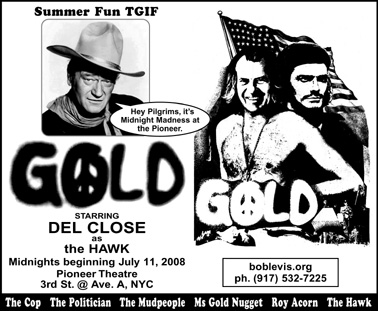
Bob Levis' GOLD at The Pioneer Theatre
In celebration of GOLD's upcoming Friday-night screenings at NYC's Pioneer Theatre (programmed by my longtime friend, Lee Peterson), here's my take on that hippie-happenin'.

GOLD [reprinted from Shock Cinema #21, 2002]
It’s always refreshing to stumble across an obscure, bizarre and baffling relic from the groovy late-’60s, when coherence was at a minimum and radical ideas were happily embraced by open-minded viewers. This begins with an opening-credit montage that includes police brutality, dead Vietnamese children, JFK’s assassination, Kent State, etc. -- so I was expecting a heavy message flick. But instead, it offered up a hippie-hodgepodge of political metaphor, barely-baked philosophy, sing-a-longs, bizarre camerawork, tinted stock, solarization, split screen, and gratuitous sex scenes that makes you wonder if the cameraman was on peyote. In other words, “Yow!” In addition, this no-budget odyssey stars improvisational comedy legend Del Close, along with fellow member of San Francisco’s The Committee, Gary Goodrow.
Its baffling story is set in an anachronistic Old West town (which contains electric guitars and mini-skirts), with all of the townsfolk in search of precious gold! Along the way, they’re attacked by modern-day soldiers and seduced by right-wing conspirators (led by a stick-in-the-mud referred to as “The Law,” played by Goodrow). There’s also a rigged election, trampled personal rights, evicted citizens, and “The Law” getting pissed whenever he spots nude flower children cavorting in the woods. No surprise, these elected-assholes feast on their power, by murdering anyone who represents freedom (or runs around in the nude) and by keeping all ‘lawbreakers’ in an animal pen.
Let's not forget a wild-eyed rebel (Del) who roams the countryside and is the only voice of reason. Oh, look, he’s hauling a big-ass cross! Could it be any more obvious?! Eventually he teaches the jailed common folk Revolution 101 (including molotov cocktails and guerrilla tactics), so they can rise up against their lowly oppressor, bulldoze their prison, fire off scrap-metal cannons, and to celebrate, everyone gets naked! Yep, there’s always some excuse to strip off your clothes for an orgy or skinny dip.
The film was shot in 1968, in Northern California, but wasn’t released theatrically (in London) until 1972, and didn’t premiere in America until 1996(!), with director/producers Bob Levis and Bill DeSloge credited as “organizers.” Frankly, I wouldn’t be surprised to learn that most of the script was improvised on the spot. Since Close and Goodrow were both experts at double-talk, they’re pretty amusing when left to their unique talents. Optical FX consultant Zoran Perisic later graduated to films like SUPERMAN and RETURN TO OZ, and there are evocative music contributions from Rambling Jack Elliot and Motor City 5 (before they shortened it to MC5). Full of good intentions and crude as hell, this is an indulgent, energetic, 90-minute burst of hoary symbolism and lovable counterculture craziness. No question, it looks like everyone had a blast filming it, and with the proper ‘medication,’ most viewers will too.
Subscribe to:
Posts (Atom)